
Botox has become a beauty essential for anyone who wants to soften wrinkles, refresh their expression, and feel confident in their skin — without going under the knife. But if you’ve never had Botox before, one question probably tops your list: how long does Botox last?
The answer depends on your body, your injector’s technique, and your skincare habits. Let’s explore exactly how Botox works, how long it lasts, and what you can do to make the results last longer.
What Is Botox and How Does It Work?
Botox is the trade name for botulinum toxin type A, a purified protein that’s been safely used in medicine for decades. When injected into specific muscles, it temporarily blocks nerve signals that cause those muscles to contract.
That small pause in muscle activity smooths the skin above it, softening fine lines and preventing new wrinkles from forming. Botox works best on dynamic wrinkles — the lines created by repeated facial movements, like smiling or frowning.
The most common treatment areas include:
- Forehead lines
- Frown lines (between the brows)
- Crow’s feet (around the eyes)
- Lip flips or small lip enhancements
- Jawline and neck contouring
So, How Long Does Botox Last?
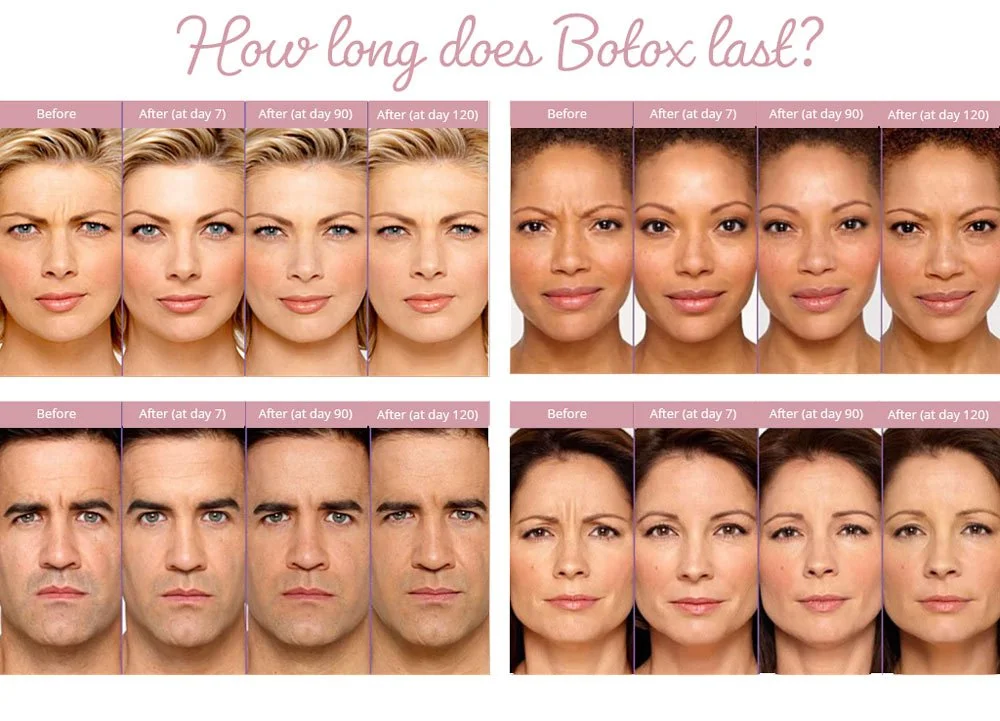
On average, Botox lasts between 3 and 6 months.
You’ll start noticing visible results within 3 to 5 days, and the full effect usually sets in around 10 to 14 days. The smooth, relaxed look can stay noticeable for several months, after which the muscles gradually regain movement.
Here’s a simple breakdown by treatment area:
| Treatment Area | Average Duration |
|---|---|
| Forehead Lines | 3–4 months |
| Frown Lines | 4–6 months |
| Crow’s Feet | 3–4 months |
| Lip Flip | 2–3 months |
| Jawline Contouring | 4–6 months |
| Neck Bands | 4–6 months |
Once the Botox wears off, the treated areas will slowly return to their pre-treatment state. Wrinkles reappear gradually, not all at once.
Why Botox Lasts Longer for Some People
If your friend’s Botox seems to last longer than yours, it’s not your imagination — and it doesn’t mean your provider did anything wrong. Several personal factors influence Botox longevity:
- Muscle Strength
Stronger facial muscles, like those in the forehead or jaw, often metabolize Botox faster. - Metabolism Rate
People with faster metabolisms — athletes or those with high activity levels — may process Botox more quickly. - Dosage and Injection Technique
The amount of Botox injected and how it’s placed make a big difference. Skilled injectors know how to create balance: enough product for results, but not so much that expressions look stiff. - Lifestyle Habits
Smoking, sun exposure, and high stress can reduce how long your results last. - Consistency
With regular treatments every few months, Botox can “train” your muscles to stay relaxed longer, meaning you might need fewer touch-ups over time.
How to Make Botox Last Longer
While you can’t completely control how your body metabolizes Botox, you can take smart steps to extend its results.
- Avoid touching or rubbing the area for 24 hours after treatment.
- Skip strenuous exercise and hot environments (like saunas) for a day or two.
- Protect your skin from the sun — UV rays accelerate aging and reduce Botox longevity.
- Stay hydrated and maintain a nutrient-rich diet.
- Use a medical-grade skincare routine, especially products with antioxidants and SPF.
- Book maintenance sessions every 3–4 months to keep results consistent.
Patients who follow these habits often notice smoother, longer-lasting effects with each session.
What Happens When Botox Wears Off?
As Botox wears off, the treated muscles gradually regain movement, and fine lines begin to reappear. However, you won’t wake up one morning with all your wrinkles back — the change is slow and subtle.
Another bonus: regular Botox users often find that their wrinkles come back less deep than before. That’s because Botox gives your skin time to rest and prevents the constant folding that deepens lines.
If you prefer to keep the refreshed look, schedule your next appointment before full muscle movement returns — usually around the 3- to 4-month mark.
Is Botox Permanent?
No — Botox is designed to be temporary and adjustable. Its reversible nature is part of what makes it safe and popular.
Over time, consistent use can actually help your muscles stay more relaxed, meaning you might need smaller doses or less frequent visits to maintain your results.
Some patients also pair Botox with fillers, facials, or laser treatments to enhance and extend the overall rejuvenation effect.
Final Thoughts
So, how long does Botox last? Typically three to six months, depending on your metabolism, muscle activity, and lifestyle.
The secret to long-lasting, natural-looking results isn’t just the product — it’s the combination of:
- A qualified injector,
- Proper aftercare, and
- Regular maintenance sessions.
When performed by an experienced professional, Botox can deliver subtle, beautiful results that enhance your features and boost your confidence — one treatment at a time.